
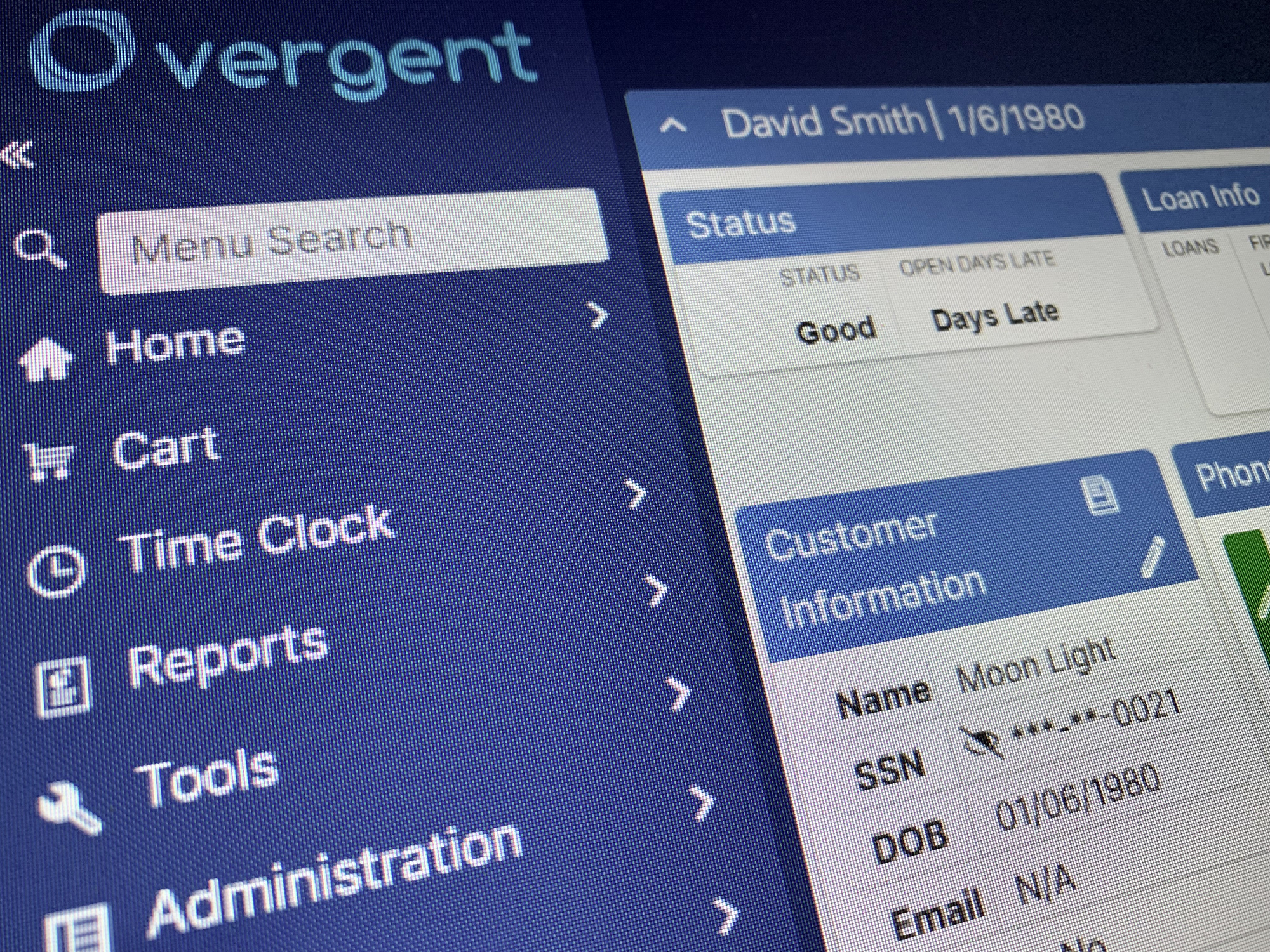
Why lenders replace a legacy lending platform
Choosing the right loan management system isn’t just about features—it’s about long-term impact. Your lending platform will influence everything from operations to borrower experience to bottom-line performance.
By the numbers: Total nonrevolving consumer credit outstanding in the U.S. reached $3.78 trillion in 2025, per the Federal Reserve G.19 Consumer Credit Report.
With so many platforms available, how do you know which one is best for your organization? In this comparison, we’ll evaluate Vergent LMS and the legacy lending platforms it typically replaces. We’ll look at five key categories that matter most to lenders.
What counts as a legacy lending platform
Legacy is not a measure of age. A system written in 2015 can be legacy and one written in 1998 might not be. What makes a lending platform legacy is that changing it has become the constraint on the business: the product you want to launch waits on a vendor release, the state you want to enter waits on custom development, and the report the examiner asked for waits on the one person who knows where the data lives.
Four signs show up repeatedly in lenders who start looking at legacy lending software replacement.
- Change requires the vendor. A new fee, a new payment frequency or a revised disclosure cannot be configured by your own staff.
- The data is hard to get out. Reporting runs on extracts and spreadsheets because the system cannot answer the question directly.
- Integrations are point to point. Every bureau, processor and vendor connection was built once, by hand, and nobody wants to touch it.
- Compliance changes arrive late. A rule changes and the platform follows some time afterward, so the gap gets covered by written procedure instead of by the system.
None of those is a software defect. They are the accumulated cost of a system that was fitted tightly to how the business worked at the moment it was installed, and that has been asked to keep up ever since.
If the alternative you are weighing is building your own rather than buying, that is a different calculation with a different failure mode, and we work through it in build or buy your loan management system.
What makes a legacy lending system replacement hard
Replacement projects rarely fail on features. They fail on the parts nobody scopes, and almost all of those are about the loans that already exist.
The loans already on the book
A lender replacing a platform is not starting from zero. There is an active book, and every loan in it carries a balance, an accrual history, a payment history and a legal record that has to survive the move intact. A balance that moves by a few cents in conversion is not a rounding question; it is a borrower statement that no longer reconciles and a dispute you will answer in writing.
History you are required to keep
Disclosure records, notices and the evidence of when each was delivered are retained under rule, not under preference. In an examination, a record that cannot be produced is treated as a record that was not made. Decide early whether history moves into the new system, stays readable in the old one, or lands in an archive — and whether whichever answer you pick can actually be searched when someone asks for one account in one month three years ago.
Configuration that was never written down
Most legacy platforms hold years of undocumented decisions: which fee applies in which state, how a payment is applied when it does not cover everything owed, which accounts route to which collections queue. Much of that logic exists only in the running system. Rebuilding it is the real discovery work, and it is usually larger than the data migration itself.
Running two systems at once
Any serious conversion includes a period where both systems hold the same loans and the figures are compared daily until they agree. That period is staffing, not software, and it is the line item most often left out of a business case.
How to sequence a legacy platform replacement
Legacy software modernization is usually sold as a single project and experienced as a sequence of decisions. The order below is the one that keeps optionality for longest and puts the irreversible steps last.
- Document the current state before you shop. Products, states, fee tables, payment application rules, every integration and every report someone depends on. This document is what you evaluate vendors against, and producing it tells you more about your own operation than any demo will.
- Test on your own loans, not the demo file. Give each vendor a handful of real structures — the awkward ones, not the clean amortizing example — and ask them to configure and run them in front of you.
- Prove the data extract early. Before anything is signed, establish that a full, reconcilable extract can be produced from the system you are leaving. If it cannot, that is the project, and everything else is downstream of it.
- Rebuild configuration, then migrate data. Configuration first gives the migration somewhere correct to land.
- Convert a segment, not the book. One product, one state, or one branch. The first conversion is where you find out what the discovery missed.
- Run parallel until the numbers agree. Agreement means balances, accruals, fees and payment postings matching day over day — not a spot check.
- Cut over, then keep the old system readable. Retire it only once you are certain nothing still needs to be read out of it.
Banks and credit unions will recognize this as the lending half of core banking modernization, and the same sequence applies: prove the extract, rebuild the configuration, convert a segment, run parallel. Timelines belong to your book and your team, not to a vendor brochure. The useful question to put to any vendor is not how fast they go live but what they need from you at each of the steps above, and who does the work when the answer is complicated.
Breadth of functionality
Here’s how each platform stacks up when it comes to core capabilities:
- Loan Origination: Most platforms offer full origination tools
- Servicing & Collections: Available across the board
- Embedded Payments: Only Vergent offers built-in payments via Omnia Pay
- Borrower SMS: Exclusive to Vergent through Omnia Text
- Real-Time Reporting: All platforms support it
➤ Verdict: Vergent LMS offers the most unified experience—no bolt-ons required.
Deployment and architecture
Implementation timelines and technical foundations make a big difference.
- Deployment model: Vergent is delivered as cloud-native SaaS; legacy systems are more often installed or hosted per client
- Cloud-Native: Only Vergent offers true SaaS infrastructure
- API Architecture: Vergent is fully API-ready; most legacy systems are limited
➤ Verdict: Vergent’s SaaS-native model gets lenders live faster—while your IT team stays focused on what makes your business unique.
Support and configuration
Support structure and configuration options often make or break long-term satisfaction.
- Named Customer Success Manager: Guaranteed with Vergent
- Market Focus: Legacy vendors tend to target either enterprises or SMBs; Vergent balances both
- Workflow Customization: Vergent allows no-code configuration; others require developer support
➤ Verdict: Vergent blends enterprise-grade features with mid-market agility.
Pricing transparency
Pricing should be clear, scalable, and flexible.
- Legacy platforms: Often require long discovery cycles to quote pricing
- Vergent: Offers transparent packaging options including:
- LMS Core
- LMS + Omnia Suite (bundled discount)
- Omnia-only API access for embedded lending
➤ Verdict: Vergent is more modular and transparent—pay for what you need, nothing more.
Borrower experience
Modern borrowers expect an intuitive, self-service experience. Here’s how each system supports that:
- SMS Reminders: Only Vergent provides built-in SMS via Omnia Text
- One-Click Payments: Embedded with Omnia Pay
- Self-Service Portals: Most platforms offer portals, but only Vergent includes full payments and messaging
➤ Verdict: Vergent leads with borrower-first design and built-in engagement tools.
Choosing a platform you will not have to replace again
Legacy systems have earned their place in the industry—but they come with trade-offs: slower deployment, less flexibility, and more reliance on third-party tools. Moving to a modern loan management platform does not have to happen in a single step.
Vergent LMS stands out by combining the speed of SaaS, the power of built-in tools, and the flexibility to scale with your lending model. If you’re looking for a system that meets today’s borrower expectations while driving internal efficiency, Vergent is the clear choice.
See it run on your own loans
Want to see how Vergent compares in a live demo? Schedule your walkthrough today.
Vergent LMS vs. Legacy Lending Platforms: Feature Comparison
Below is a side-by-side breakdown of Vergent LMS against typical legacy platforms across the features that matter most to consumer and commercial lenders.
| Feature | Vergent LMS | Typical legacy platform |
|---|---|---|
| Loan Types Supported | Consumer, installment, auto | Varies by vendor; many are specialized to a single segment |
| Deployment | Cloud-native SaaS | Often installed or hosted per client, on-premise or cloud |
| Vendor Integrations | 80+ pre-built integrations | Commonly fewer pre-built connections, with custom integration work |
| API Access | Open REST API | Varies; access is often limited or restricted |
| Compliance rules | Reg F, TILA and state-specific rules held in configuration you can see and audit | Varies; rule changes are often handled manually or wait on a vendor release |
| Reporting & Analytics | Real-time dashboards + custom report builder | Often standard reports with limited custom reporting |
| Origination Module | Yes, full LOS built in | Some include origination; others are servicing only |
| Support | 24/7/365 with dedicated implementation team | Commonly business hours, with professional services billed separately |
| Notable Clients | FDIC (unique), community banks, fintechs | Varies by vendor |
| Inc. 5000 Recognition | ✓ 7 consecutive years | Varies by vendor |
What to compare when evaluating lending platforms
Lenders weighing loan management software alternatives usually start with a feature grid, which is easy to win and easy to write. The comparisons that actually separate platforms are the ones a vendor cannot answer with a checkmark, so ask any vendor — us included — to show rather than confirm.
Can your own staff change it?
Ask to watch someone add a fee, change a payment frequency and alter a disclosure, in the live system, without the vendor touching it. Whoever has to be in the room for that is who you will be waiting on for the next ten years.
What happens to a loan that does not behave?
A payoff mid-term, a payment that does not cover what is owed, a refinance, a borrower who falls under a protection that changes the rate. Every platform handles the clean case. Watch the awkward ones. Our loan servicing glossary entry sets out the structures worth testing.
Where does compliance live?
Whether state rules, disclosure content and notice triggers sit in configuration you can see and audit, or in code you cannot. Ask how a rule change reaches your environment, and what you are expected to do when it does.
Can you get your data back out?
Ask for the export format on the way in, not on the way out. A platform you cannot leave is a platform you will one day be describing as legacy.
What does the borrower see?
Self-service is where servicing cost either falls or does not. Look at what a borrower can complete alone and what still requires a call — the distinction is set out on our borrower portal page.
What does the reporting answer?
Not whether dashboards exist, but whether you can reconstruct a position as of a date, and whether the figures behind charge-off and delinquency reporting are the same figures the servicing system uses.
Why consumer lenders choose Vergent over legacy platforms
Legacy platforms tend to specialize — some in auto and dealer finance, others in commercial lending. Vergent LMS is built for the consumer lending market with end-to-end origination and servicing under one roof. Key differentiators:
- End-to-end platform: Vergent handles loan origination, servicing, collections, and reporting, eliminating the need for two separate systems.
- Open integration ecosystem: With 80+ pre-built integrations (credit bureaus, payment processors, CRMs, compliance tools), Vergent connects to the systems you already run through connections that exist rather than ones built for you.
- Cloud-native architecture: No on-premise maintenance burden, Vergent updates automatically and scales with your loan volume.
- Clients include the FDIC: Vergent is backed by SOC 1 Type II and SOC 2 Type II certification and 20,000+ daily users.
- Proven track record: across startups to enterprise lenders, with 7 consecutive Inc. 5000 appearances.
Frequently Asked Questions
How does Vergent compare to legacy loan management systems?
Vergent and legacy loan management systems serve the same market but differ in core architecture. Vergent is cloud-native SaaS with built-in loan origination, while legacy systems typically rely on on-premise or hosted deployment with a stronger focus on commercial and SBA lending. Vergent has a broader integration ecosystem (80+ integrations) and includes 24/7 support as standard. Consumer lenders with high transaction volume typically find Vergent’s automation and compliance tooling more suited to their needs.
How does Vergent differ from auto- and dealer-focused legacy platforms?
Some legacy platforms focus primarily on indirect auto lending and dealer finance, making them a strong fit for captive auto lenders. Vergent LMS is broader, covering consumer installment, and commercial loans, with a full origination module built in. If you originate and service consumer loans across multiple products, Vergent is the stronger fit.
Which loan management system is best for consumer lenders?
For consumer lenders, particularly those offering installment loans, personal loans, or small dollar loans, Vergent LMS is built for exactly that profile. It includes end-to-end origination and servicing, built-in regulatory compliance for consumer lending (TILA, Reg F, state installment laws), and 80+ integrations with credit bureaus and payment processors. The FDIC and multiple Inc. 5000 rankings reinforce its credibility in the consumer lending space.
Is Vergent LMS more expensive than legacy platforms?
Vergent LMS pricing is customized based on loan volume, product types, and integration needs, as with most enterprise lending platforms. Factors that affect total cost include implementation scope, number of users, and support tier. Many Vergent clients report that the elimination of a separate LOS system (since Vergent includes origination) significantly reduces total platform cost versus running separate loan origination and servicing systems.
Does Vergent offer on-premise deployment?
No, Vergent LMS is cloud-native SaaS only. This is by design: cloud deployment ensures Vergent clients receive automatic compliance updates, feature releases, and security patches with no added workload for your internal IT team. For lenders who require on-premise due to strict data residency requirements, an on-premise legacy system may be a better fit. For the majority of consumer and commercial lenders, cloud-native deployment with SOC 1 Type II and SOC 2 Type II certification more than satisfies security and compliance requirements.
What is a legacy lending platform?
A lending platform becomes legacy when changing it has become the constraint on the business — new products, new states and new reports all wait on vendor development rather than on configuration your own staff can perform. Age is not the test; the cost of change is.
What is the hardest part of replacing a legacy lending system?
The loans already on the book. Balances, accrual history, payment history and the retained disclosure record all have to survive conversion intact, and the undocumented configuration inside the old system usually takes longer to rebuild than the data takes to move.
Should historical loan data move to the new platform?
Decide deliberately rather than by default. History can move into the new system, stay readable in the old one, or go to an archive — but whichever you choose has to remain searchable for a single account in a single month, because that is the form an examination request takes.
What should you compare when evaluating lending platforms?
Whether your own staff can change configuration without the vendor, how the system handles loans that do not behave, whether compliance rules sit in auditable configuration, whether you can export your own data, what a borrower can complete without calling, and whether reporting reconciles to the servicing record.
Related Reading
- Loan Origination System vs. Loan Management System, Understand the difference before choosing a platform.
- What Is a Loan Management System?, Full feature guide and benefits overview.
- What Makes Great Loan Management Software?, Must-have features and red flags.
- Build or Buy Your Loan Management System, What each path actually requires before the first loan.